Blog
Is a Condo in Singapore Still a Good Investment in 2026?
Published 21 October 2025
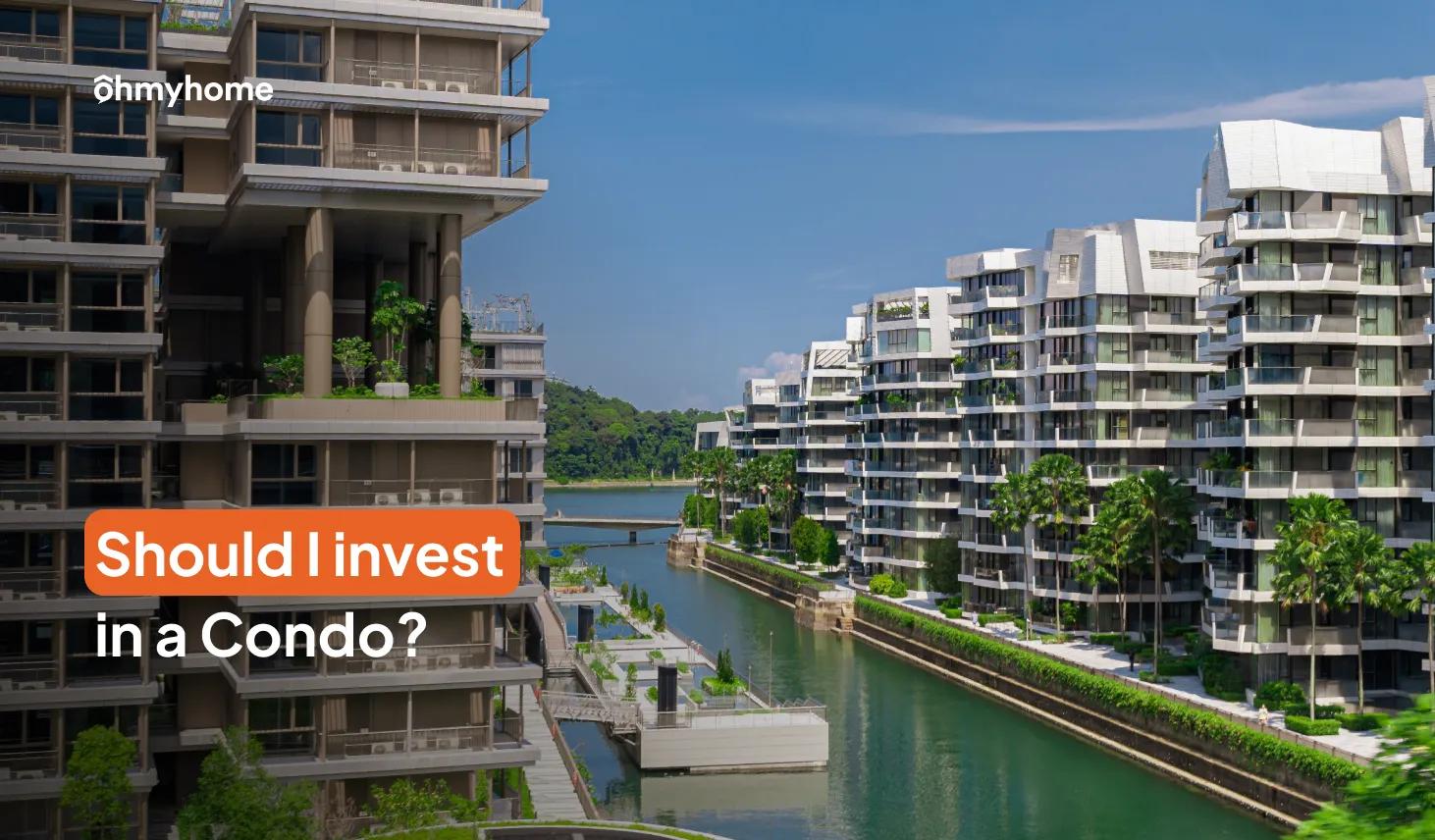
Condominiums in Singapore have long been seen as more than just a home. For many, they represent a financial milestone and a long-term asset worth building toward. In 2026, that reputation still holds up.
Private condo prices are forecast to grow around 3% this year, underpinned by steady demand and lower interest rates.
That said, like any major financial decision, it comes with its own set of considerations. But if you’re weighing up whether a condo is worth it, here are all the reasons why it still makes a strong case as a long-term investment.
TL;DR / Key Summary:
– Singapore’s private property market has trended upward for decades, and condos generally appreciate faster than HDB flats over the long term.
– Leasehold condos can still deliver strong returns, especially if you sell while the lease is healthy or rent it out to generate consistent income.
– Freehold condos don’t face lease decay, making them a flexible lifetime investment you can hold, sell, or pass down at any point.
– Upcoming MRT lines and regional business hubs are set to drive long-term value in condo neighbourhoods across Singapore.
Table of Contents:
- Things to Consider Before Investing in a Singapore Condo
- 1. Condominiums Have a High Chance of Appreciating
- 2. Even Old Leasehold Condos Have a Market
- 3. Freehold Condos Are Yours Forever
- 4. Condo Neighbourhoods Are Not Done Developing Yet
- Find the Right Property to Invest In
Things to Consider Before Investing in a Singapore Condo

There is certainly a reason to throw financial caution to the wind before buying a condo. An average condo costs $1,972.40 per square foot (psf), compared to HDB flats which average at around $596.81 psf. Buying a condominium can set you back by more than a million dollars over the course of your mortgage payment.
That said, there are two ways to make a condo work as an investment. The first is capital gains, selling your unit at a profit once it has appreciated. To truly come out ahead though, the sale price needs to clear not just your purchase price but also costs like Seller’s Stamp Duty (SSD), renovations, and maintenance works.
The second is rental income, leasing out your unit to generate returns that help offset your mortgage and holding costs while the property continues to appreciate.

Neither approach is a quick win. Property investment in Singapore rewards patience, and anyone entering the market should be financially prepared to hold for the long term. Don’t expect to make a quick buck in three, five, or even 10 years.
While there are definitely property investment gurus who have done this in the past, you should not bank your entire life savings on something that may or may not happen. There’s nothing worse than having to extend your mortgage lease or making a loss by selling when you don’t have a choice, so only invest in a condo if you’re confident of holding onto it without financial difficulties.
With that said, Singapore is actually a pretty good place to invest in a condo. If you can handle the heat of the property market, your future self will thank you for investing in a Singapore condo. Stick to the end, and we’ll let you in on how you can increase your chances of getting a condominium for discounts as high as 10%.
1. Condominiums Have a High Chance of Appreciating
Singapore’s private property market has shown remarkable resilience over the long term. Private residential property prices have surged 52.8% over the past decade and 156.1% over the past 20 years, according to SmartWealth.
That upward trend has continued in more recent years too, even as growth has moderated. Private home prices rose 10.6% in 2021, 8.6% in 2022, 6.8% in 2023, and 3.9% in 2024, before moderating further to 3.3% for the full year of 2025. The pace of growth has slowed, but the direction has remained consistently upward.
This moderation is largely by design. The government has introduced cooling measures over the years to keep prices from running too far ahead of incomes, which is actually a sign of a well-managed market rather than a weakening one.
Singapore condominiums generally appreciate faster than HDB flats over the long term, since private property prices have no government-imposed ceiling. For HDB flats, affordability is the priority by design, which naturally limits how high prices can go.

Singapore condominiums generally appreciate faster than HDB flats because HDB flats are designed to provide affordable housing for the masses; meaning that the ceiling prices for HDBs will always be less penetrable compared to condominiums.
2. Even Old Leasehold Condos Have a Market
To many Singaporeans, 99-year lease condos are depreciating assets that will have their value plummet to zero once the lease is up. While there is definitely some truth in that statement, this doesn’t mean that the value of leasehold condos will decrease uniformly. There are still ways to get the most out of your investment before the 99-year timebomb runs out.
The first way to get a high return on investment is to sell the condo while the lease is still healthy. As a rule of thumb, condo owners should sell their homes before the lease falls below 40 years. That’s because it becomes increasingly difficult to secure substantial bank loans once the lease falls below that period and virtually impossible past the 30-year mark.
That said, remaining lease means little to foreign sojourners who do not regard Singapore as their forever home. As long as your home is well maintained and in a good location, there will still be willing foreign buyers looking for a vacation home or a place to rent out while they are out of the country (disclaimer: Singapore may no longer be the foreign investment haven it once was with the recent 30% increase in ABSD for foreigners. That said, we’re still a significant contender on the international scene).
Speaking of rent, barring the highly unlikely situation of your tenants intending to stay longer than your remaining lease, renting out a leasehold condo will nearly always yield the highest profits. Most tenants are just looking for a nice place to stay. By renting out a leasehold condo, you can charge higher rent than HDB flats, all while saving extra cash that would have been otherwise spent on a freehold.
Finally, there are signs to show that remaining lease is becoming less of a factor for home buyers. There have even been anecdotal reports of condos older than 40 years old continuing to appreciate simply by virtue of their location. This suggests that more and more buyers may not be purchasing condos for the long haul.
3. Freehold Condos Are Yours Forever
Freehold condos hold their own advantage over leaseholds. The fact that they don’t expire means that they make good lifetime investments. With freehold condos, you don’t have to time your sale as much as leasehold condos or HDB flats. It’s perfectly safe for you to purchase a freehold condo with the intention to stay put forever, and change your mind to sell it off when you’re way into retirement.
While the appreciation of leasehold condos and HDB flats will rapidly slow down after 30-40 years, freehold condo prices do not face the problem of value decay. You can even hand your freehold condo to children or grandchildren, and there will always be bank loans available for willing buyers looking to get their hands on private property that they can truly call their own.
Barring landed property, which are out of reach for most individuals, freehold condos are your next best bet for a stable investment that affords you the freedom to do whatever you want with it.
4. Condo Neighbourhoods Are Not Done Developing Yet
By 2030, the Land Transport Authority plans to have 8 in 10 households within 10 minutes of an MRT station. The Urban Redevelopment Authority (URA) also plans to deconcentrate the Central Business District (CBD) by developing business hubs in heartland areas.
For example, the developments in the Punggol Digital District are projected to bring 28,000 jobs and 12,000 students into the area. These developments include Singapore Institution of Technology’s relocation of its campus to the town and the development of Punggol Coast MRT closer to the shoreline. These infrastructure upgrades will no doubt help to buoy private property prices in the area for decades to come.
And with the upcoming Cross Island Line and long awaited completion of the Circle Line (so that it finally becomes a real circle), there will be no shortage of condos rising in value across the country.
Find the Right Property to Invest In

Many condo developers offer their units at an early bird discount which can sometimes go as high as 10%. Considering that most condos cost around $1.9 million, this means that you’ll lock in at least an additional $190,000 in profits by purchasing a condo early.
Knowing where to find these discounts and securing them fast enough is all about having the right tools and agents. With Ohmyhome’s smart data-matching technology, we can MATCH you with the right home that fits all your investment needs. Simply submit your preferences and let our algorithm do all the work. Our Super Agents will contact you via WhatsApp the moment a match is found.
Call us at +65 9755 9283 to get the best deals on your next investment or learn how much your property is worth from any of our Super Agents or message us in the chat box at the bottom right-hand corner of the screen.
If you’re on the go, you can quickly message us on WhatsApp to get started.
Frequently Asked Questions
1. Is it better to buy a new launch condo or a resale condo as an investment?
Both have their merits. New launch condos come with progressive payment schemes and the potential for appreciation by the time they’re completed, but they generally cost more per square foot and you’ll wait years before moving in or earning rental income. Resale condos are typically cheaper per square foot, offer immediate occupancy, and give you a clearer picture of what you’re buying before you commit.
2. How much do I need to earn to afford a condo in Singapore?
As a general guide, your total monthly debt obligations cannot exceed 55% of your gross monthly income under the Total Debt Servicing Ratio (TDSR) framework. For a $1.5 million condo with a 75% loan, most buyers would need a gross monthly income of at least $10,700, assuming no other existing debts. That figure rises if you have a car loan or other financial commitments.
3. Do condos have a good resale value?
Yes, condos in Singapore generally have strong resale value, though it depends on a few key factors. Location, remaining lease, and proximity to amenities and transport links all play a significant role in what buyers are willing to pay. Freehold condos tend to hold their value more consistently, while leasehold units are best sold before the lease drops below 40 years to maximise returns.
4. Can foreigners buy condos in Singapore?
Yes, foreigners can buy private condominiums in Singapore without restrictions. However, they are subject to a 60% Additional Buyer’s Stamp Duty (ABSD) on any residential property purchase, which significantly raises the cost of entry compared to Singapore citizens and permanent residents.