Blog
8 Simple Ways To Spot An Undervalued Property in Singapore 2026
Published 13 September 2024
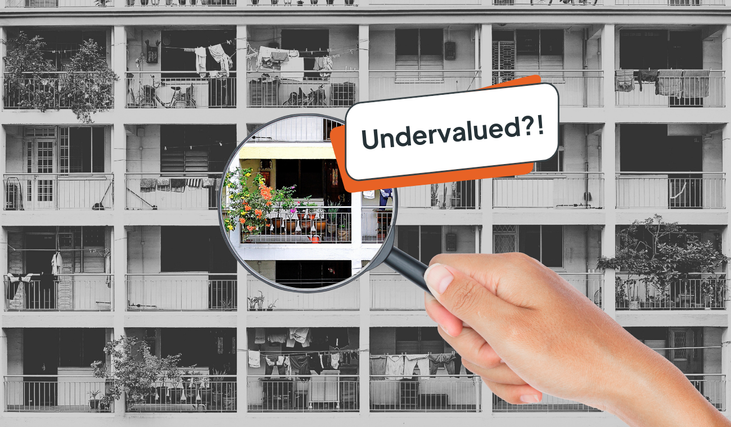
Spotting an undervalued property in Singapore comes down to comparing recent transaction prices, understanding market timing, and recognising when a home is priced lower than similar properties with comparable fundamentals.
When it comes to property buying or investment, recognising this difference can be a major advantage, whether you are seeking long-term appreciation, stronger rental potential, or simply a smarter entry price.
However, with Singapore’s ever-fluctuating real estate market, it can be challenging to know where to start. In this article, we will explore the top tips for spotting undervalued properties in Singapore and maximising your returns.
TL;DR / Key Takeaways:
– An undervalued property is typically priced about 5% to 15% below comparable recent transactions.
– Recent transaction prices matter more than listings. Compare units sold within the past 3 to 6 months in the same project or nearby developments to identify real pricing gaps.
– Price gaps often appear near new launches or upcoming developments, where resale homes may still reflect older price levels before neighbourhood values adjust.
– Motivated sellers can create opportunities. Multiple price reductions, long listing durations, or flexible timelines may signal stronger negotiation potential.
– Strong rental demand and future area improvements (new MRT stations, amenities, or urban renewal) can indicate locations where prices have yet to fully catch up with long-term demand.
Tips for Finding Undervalued Properties:
- 1. Compare Recent Transactions — Not Listing Prices
- 2. Look for Price Gaps Between Resale and New Launch HDB or Private Property Projects
- 3. Identify Areas Where Prices Haven’t Caught Up Yet
- 4. Watch for Motivated Sellers and Distress Situations
- 5. Study Rental Demand and Market Activity
- 6. Look for the “Worst Unit in a Good Location”
- 7. Understand Market Cycles and Buyer Sentiment
- 8. Work With a Professional Real Estate Agent
- Let Ohmyhome Super Agents Help You Find An Undervalued Property in Singapore
- Frequently Asked Questions About Spotting An Undervalued Property in Singapore
What is Considered an Undervalued Property in Singapore?
An undervalued property is not simply a cheap or older home. Instead, it refers to a home priced lower than similar properties with comparable characteristics such as location, size, condition, and accessibility.
In many cases, undervaluation happens because of:
- Seller urgency or timing pressures
- Temporary market sentiment
- Nearby developments not yet reflected in prices
- Buyer perception overlooks long-term potential
In Singapore, undervalued properties are often estimated to be around 5% to 15% below comparable market transactions, assuming there are no major structural issues affecting the unit.
Understanding this distinction helps buyers avoid confusing affordability with genuine value.
How to Find Properties That Are Undervalued in Singapore
Here are eight practical ways to evaluate whether a property may be priced below its true value:
1. Compare Recent Transactions — Not Listing Prices
One of the easiest ways to misjudge a property’s value is by relying on listing prices alone. Listings reflect what sellers are asking, but recent transactions show what buyers were actually willing to pay, making them a far more reliable benchmark.
When comparing properties, focus on homes that are as similar as possible:
- Units within the same project or nearby developments
- Similar floor area and layout
- Transactions completed within the past 3 to 6 months
For example, if similar units in the same development recently sold at around $1,400 psf, but a comparable listing appears closer to $1,280 psf, the difference isn’t just about price; it raises an important question: what does the market see differently about this unit?
Sometimes, the lower price is justified. The unit may be on a lower floor, face a busy road, require significant renovation, or have features that make it less desirable to buyers. In such cases, the discount simply reflects these trade-offs.
However, if the unit shares similar attributes, such as floor level, condition, layout, and facing, yet remains priced noticeably below recent transactions, it may indicate the property is priced more competitively than market expectations. This is where potential undervaluation can arise.
Think of recent transaction prices as the market’s reference point. They help you understand whether a property is genuinely offering better value, or if the lower price is simply explained by underlying differences that buyers should take into account.
2. Look for Price Gaps Between Resale and New Launch HDB or Private Property Projects
Another useful signal is the price difference between resale homes and nearby new launches. New launch HDB or private property projects are almost always priced higher because they are brand new and set fresh pricing benchmarks for the neighbourhood.
When a new project is launched, or even just announced, surrounding resale properties may still reflect older price levels. This creates a short window where resale units in the same area can be noticeably cheaper despite sharing similar location advantages.
Over time, new developments often raise overall price expectations in the neighbourhood, especially if they introduce new amenities, retail spaces, or improved convenience. As the area evolves, resale prices may gradually adjust upward as well.
Buying during this gap means entering the location before prices fully catch up, which is why some buyers see resale properties near new launches as potential value opportunities.
3. Identify Areas Where Prices Haven’t Caught Up Yet
Location matters, but so does a neighbourhood’s evolution. Sometimes prices remain moderate simply because improvements are still underway and buyers have yet to recognise the area’s potential fully.
Look for locations undergoing gradual change, such as:
- Newly opened or upcoming MRT stations
- Estate rejuvenation or urban renewal plans
- Emerging business districts or employment hubs
- New malls, parks, or community amenities
Unlike new launch-driven price shifts, these changes improve everyday convenience and liveability over time. As accessibility and amenities become established, demand often grows naturally, which can support future price growth.
Buying before these improvements are fully realised may allow buyers to enter an area while prices still reflect its past rather than its future.
4. Watch for Motivated Sellers and Distress Situations
Sometimes, a property is priced lower not because something is wrong with it, but because the seller needs to move quickly. Personal circumstances can influence pricing more than market value.
Sellers may be more open to negotiation due to relocation plans, financial adjustments, family changes, or tight timelines for completing a sale. In these cases, securing a faster transaction may matter more to them than achieving the highest possible price.
Buyers can identify motivated sellers by closely monitoring property listings. Look out for units that show multiple price reductions, have been listed longer than similar homes in the same area, or appear vacant and ready for immediate completion. Property portals often display listing history, which can reveal how pricing has changed over time.
During viewings, agents may also hint at flexible timelines or openness to negotiation. These signals suggest the seller may prioritise certainty over price, creating opportunities for buyers, provided the property itself checks out during due diligence.
5. Study Rental Demand and Market Activity
Another useful clue is observing how rental demand compares with property prices in the same area. Sometimes, home prices may slow down or dip slightly, but rental activity remains strong, units continue to find tenants quickly, and rental rates stay relatively stable.
When people still want to live in a neighbourhood despite softer buying sentiment, it suggests the area remains desirable and well-connected. This can mean prices have adjusted temporarily, rather than reflecting a long-term decline in demand.
You can look out for signs such as frequent rental listings being taken up quickly or consistent tenant interest in the area. Locations near MRT stations, business districts, universities, or major workplaces tend to attract steady rental demand, which often helps support property values and allows prices to recover more steadily over time.
6. Look for the “Worst Unit in a Good Location”
A common property principle is to look for the least attractive unit in a strong location. This doesn’t mean buying a poor-quality home. It means recognising when a unit appears less appealing on the surface but still benefits from desirable fundamentals.
Examples include homes with older interiors, outdated renovations, poor listing photos, or minor cosmetic issues that turn away some buyers at first glance. Because many people focus heavily on appearance, these units may attract less interest and end up priced lower than similar homes nearby.
This is where potential undervaluation can occur. Cosmetic issues are often easier and cheaper to improve over time, while location, accessibility, and surrounding amenities cannot be changed. If the fundamentals remain strong, buyers may secure better value simply because others overlooked the property’s long-term potential.
7. Understand Market Cycles and Buyer Sentiment
Property prices don’t move in a straight line. They go through periods when buying activity slows. This often happens when interest rates rise, new cooling measures are introduced, or economic news makes buyers more cautious.
During these quieter periods, fewer people may be actively house-hunting, which can reduce competition and lead some sellers to adjust prices to attract buyers. For patient buyers, this creates moments where properties may be listed closer to, or occasionally below, recent market levels.
Instead of reacting to headlines alone, observe whether good-quality homes are staying on the market longer or whether sellers are appearing more open to negotiation. When strong locations see reduced competition rather than reduced demand, it may signal an opportunity to enter the market at a more favourable price.
8. Work With a Professional Real Estate Agent
A seasoned property agent can help you spot undervalued properties in Singapore. Real estate agents have access to a wide range of properties and can help you find the right investment opportunity that meets your needs and budget. A good real estate agent can also provide you with valuable insights into the local property market.
Spotting undervalued properties in Singapore requires a combination of research, analysis, and expertise. With these tips, you can increase your chances of finding a great investment opportunity that will yield long-term returns.
It is important to note that purchasing undervalued properties involves risks and requires careful consideration and due diligence. It is recommended that you seek professional advice from a licensed property agent so you can make the best decisions.
Let Ohmyhome Super Agents Help You Find An Undervalued Property in Singapore

Having the right guidance can help you evaluate options more confidently and avoid costly guesswork.
Our Super Agents are CEA-certified and among the Top 1% in Singapore. We leverage recent transaction prices, neighbourhood price movements, and comparable property sales to guide you through market opportunities with data-backed expertise.
Whether you’re looking to buy an undervalued property, planning to sell your current home, or exploring rental options, having experienced support can make the process smoother and more reassuring.
Secure an appointment with any of our Super Agents by dropping us a message on WhatsApp or via our Live Chat in the bottom-right corner of the screen.

Frequently Asked Questions About Spotting An Undervalued Property in Singapore
1. How do I know if a property is undervalued in Singapore?
A property is undervalued when it is priced lower than similar units recently sold in the same area despite having comparable size, floor level, condition, and location. Check transactions completed within the past 3 to 6 months. If similar homes sold at higher prices without clear differences, the lower price may signal undervaluation.
2. Is a cheaper property always considered undervalued?
No, a cheaper property usually costs less because buyers see clear disadvantages, such as a low floor, west-facing afternoon sun, outdated interiors, road noise, shorter lease balance, or weaker location demand. A property is only undervalued when these factors cannot explain the lower price.
3. What should I compare when evaluating a property’s true value?
Compare recent transaction prices, floor levels, unit sizes, layouts, remaining lease terms, and exact locations within the same project or nearby developments. Use sales completed in the last 3 to 6 months as benchmarks, since listing prices show asking amounts but transactions reflect what buyers actually paid.