Blog
Will Singapore’s Falling Birth Rate Affect the Property Market?
Published 25 March 2026
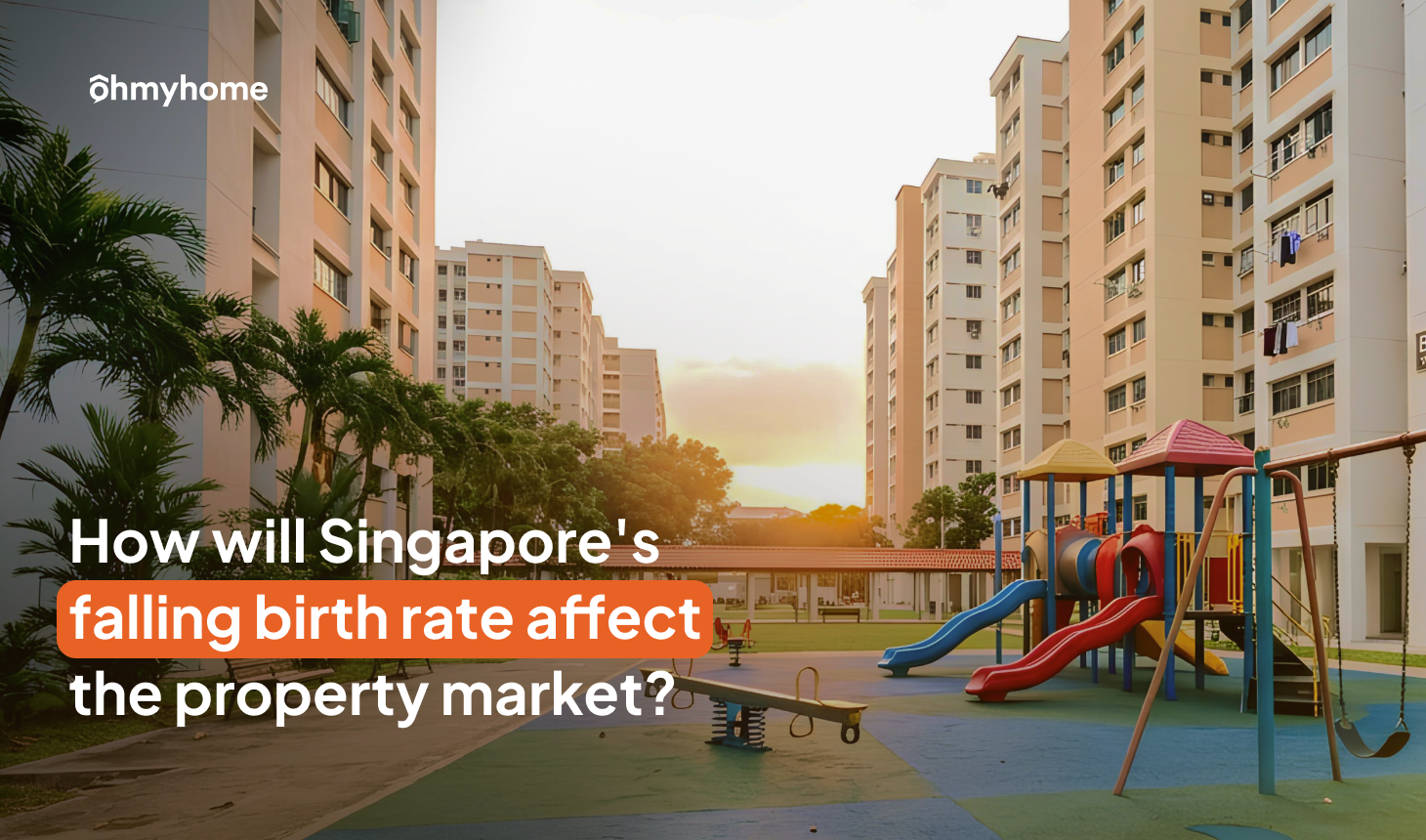
Singapore’s birth rate has been making headlines for all the wrong reasons, but the part that most people miss is how directly it connects to the property market. Fewer babies today eventually means fewer people looking for flats, applying for BTOs, and driving housing demand decades down the line.
Singapore’s Total Fertility Rate (TFR) fell to just 0.87 in 2025, down from 1.24 a decade ago, and well below the 2.1 needed to sustain the population on its own. Marriages are declining, the average household has shrunk to 3.0 persons, and the ripple effects are already showing up in housing policy and buyer behaviour.
Here’s what property buyers, sellers, and investors need to know.
TL;DR / Key Summary:
– Singapore’s TFR dropped to 0.87 in 2025, with just 27,500 resident births, the lowest ever recorded.
– The average HDB household has shrunk to 3.0 persons, driving demand toward smaller, more flexible flat types.
– HDB expanded 2-room Flexi BTO access to singles islandwide from October 2024, with plans to increase Flexi supply by nearly 50% over three years.
– The property market remains strong short-term, but the long-term buyer pool is set to shrink if birth rates stay low.

Table of Contents:
- The Relationship Between Babies and Property is Simpler Than You Think
- How This is Already Playing Out in Policy
- The Short-Term vs Long-Term Tension
- What Kind of Properties Hold Up Best in a Shrinking-Household World?
- The Wild Card: Can Government Intervention Change the Trajectory?
- The Bottom Line for Property Decisions
- Looking to Sell, Buy, or Rent a Property? Get Help From a Property Agent
- Tired of Browsing Through Thousands of Listings? Let Ohmyhome Match You With the Right Home
- Frequently Asked Questions
The Relationship Between Babies and Property is Simpler Than You Think

Here’s the uncomfortable math. Roughly 27,500 resident births were recorded in 2025, the lowest annual number since records began. That’s an 11% drop from the 30,808 births in 2024. Each of those “missing” births represents someone who, 25 to 30 years from now, won’t be applying for a BTO flat, won’t be entering the condo resale market, and won’t be signing a rental lease.
But the impact doesn’t start in 2055. It starts much earlier.
Fewer births today are the tail end of a pattern that includes later marriages, more singles choosing to stay single, and couples choosing to have one child or none. All of these shifts are already changing what housing demand looks like right now.
The average HDB household has shrunk from 3.1 persons in 2018 to 3.0 in 2023/2024. That compression is subtle on paper but massive in aggregate. When you multiply it across Singapore’s housing stock, it means the market is tilting toward smaller, more flexible living arrangements and away from the big family flats that defined public housing for decades.
How This is Already Playing Out in Policy
The government isn’t waiting around for these trends to become a crisis. Policy has already started shifting in response to changing demographics, and some of these moves are among the most significant housing reforms in years.
Falling birth rates don’t just mean fewer children. They mean more adults who never marry, more couples who stay child-free, and more single-person households overall. That’s partly the context behind HDB’s decision in October 2024 to expand 2-room Flexi BTO access to singles aged 35 and above across all locations islandwide, including what used to be classified as mature estates. Previously, singles could only buy new 2-room Flexi flats in non-mature towns.
Are More Single Women in Singapore Buying Property Now?
It’s a move that only makes sense when you look at what the birth rate is doing to household composition. With fewer families forming, the public housing system can no longer be designed just around couples with kids as the default buyer.
The government also plans to increase the supply of 2-room Flexi flats by nearly 50% over the next three years, a clear signal that smaller households aren’t a temporary.
The Short-Term vs Long-Term Tension
This is where things get interesting for buyers and investors, because the short-term market story and the long-term demographic story are pulling in different directions.
Right now, the property market is still strong. HDB resale prices have risen for 22 consecutive quarters since Q2 2020. Million-dollar HDB transactions hit record highs in 2026, with over 4,000 flats crossing the seven-figure mark from the very first transaction in 2012 to 2025 December according to SmartWealth.
Private home prices, while moderating, still grew in 2025. Rental activity remains healthy, supported by an estimated total population of 5.9 million and continued foreign workforce inflows.
But the structural underpinnings are shifting. Deputy Prime Minister Gan Kim Yong warned in Parliament that even with immigration, the citizen population grew just 0.7% in 2025. That growth rate has been slowing for a decade. Without further intervention, the citizen population could start shrinking by the early 2040s.
4 Trends (+ 2 Myths) That Will Define Your Property Sale in 2026
So what does this tension mean practically?
It means the property market isn’t about to collapse because of low birth rates. The immediate demand drivers, including buyers moving from HDB to private housing, immigration, BTO supply management, and a strong homeownership culture, are still intact. But it also means that the long-term growth assumptions baked into many property decisions may need recalibrating.
If you’re selling, it’s worth thinking about how shifting demographics could affect demand and resale value for your flat type and location over time. And if you’re making a 20-to-30-year investment bet purely on capital appreciation, the buyer pool at the other end of that timeline is going to look meaningfully different from today’s.
What Kind of Properties Hold Up Best in a Shrinking-Household World?
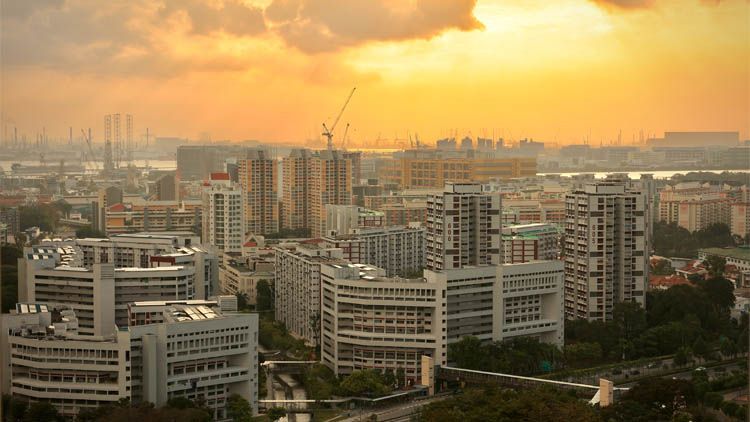
Not all property types face the same demographic headwinds. Some are actually better positioned as households get smaller and the population ages.
1. Compact, Well-located Units are the Sweet Spot
A well-connected two-bedroom or three-bedroom unit near an MRT interchange works for almost every demographic scenario: a young couple without kids, a single professional, or a retiree rightsizing from a larger flat. These units serve the broadest possible buyer pool regardless of how fertility trends play out.
2. Location is Becoming More Important Than Size
As households shrink, the old calculus of “more bedrooms = more value” is giving way to “better location = more resilient demand.” Proximity to public transport, healthcare facilities, and daily amenities is increasingly what holds value, especially as the over-65 cohort (now one in five citizens) grows and prioritises accessibility over square footage.
3. The Rental Market Has a Different Dynamic
Immigration is the government’s primary tool for offsetting low birth rates, with plans to grant 25,000 to 30,000 new citizenships and about 40,000 PR statuses annually over the next five years. But new arrivals, especially non-residents on work passes, enter the property market primarily as tenants, not owners. They face significantly higher stamp duties that limit homeownership participation.
For investors, this means rental demand near employment corridors and business hubs may remain robust even as ownership demand among citizens moderates over time.
Larger family-sized units may face softer demand growth. This doesn’t mean 5-room flats are suddenly a bad buy. But the pool of families who need that much space is growing more slowly than it used to. If you’re purchasing a larger unit, make sure the location and lease profile justify the premium independent of assumptions about a growing buyer pool.
The Wild Card: Can Government Intervention Change the Trajectory?
Singapore has been trying to reverse its fertility decline since the late 1980s, when the government pivoted from “Stop at Two” to actively encouraging larger families. Decades of Baby Bonuses, housing grants, and parenthood incentives later, the TFR has continued falling.
The $7 billion FY2026 Marriage and Parenthood budget is the most aggressive financial commitment yet. And to be fair, Singapore’s approach is more comprehensive than what most countries have tried: it covers everything from cash bonuses to housing access, childcare subsidies to workplace flexibility.

But the track record across East Asia is sobering. Japan, South Korea, and Taiwan have all thrown significant resources at the same problem with limited success. South Korea’s TFR recently dropped to 0.68, the lowest in the world. These aren’t countries that lack financial resources or policy ambition. The forces driving fertility decline, including shifting priorities, career focus, cost of living, and changing attitudes toward marriage, appear to run deeper than any single policy lever can reach.
For property planning purposes, the safest assumption is that birth rates will stabilise at historically low levels rather than bounce back to replacement rate. Plan for a market where household formation stays modest, immigration fills some but not all of the gap, and the buyer profile continues diversifying away from the traditional married-couple-with-kids default.
The Bottom Line for Property Decisions
Singapore’s falling birth rate isn’t going to trigger a market crash. The government is too proactive, the housing system too well-managed, and demand too structurally supported by immigration and homeownership culture for that to happen. But it is changing the shape of demand in ways that matter for anyone making a property decision today.
The types of homes people want are shifting toward smaller, more flexible formats. The locations that hold value are increasingly defined by connectivity and amenities rather than sheer size. The rental market’s strength is tied to immigration flows more than organic population growth. And the long-term buyer pool for any property purchased today will be drawn from a smaller, older, and more demographically diverse population than the one we have now.
None of this is cause for panic. But it is cause for sharper thinking.
Looking to Sell, Buy, or Rent a Property? Get Help From a Property Agent
Whatever the market looks like, having a professional property agent in your corner can make all the difference when it comes to making the right move. If you’re looking to buy an HDB flat or planning to rent, Ohmyhome’s Super Agents can help match you with the right sellers and properties that fit your budget, lifestyle, and long-term goals.
Or if you’re thinking about selling your home, our agents can help you price and position your property to attract the right buyers and secure the best deal. You can also use HomerAIto check your property’s current estimated value before making any decisions.
Connect an Ohmyhome Super Agent on WhatsApp today.
Tired of Browsing Through Thousands of Listings? Let Ohmyhome Match You With the Right Home
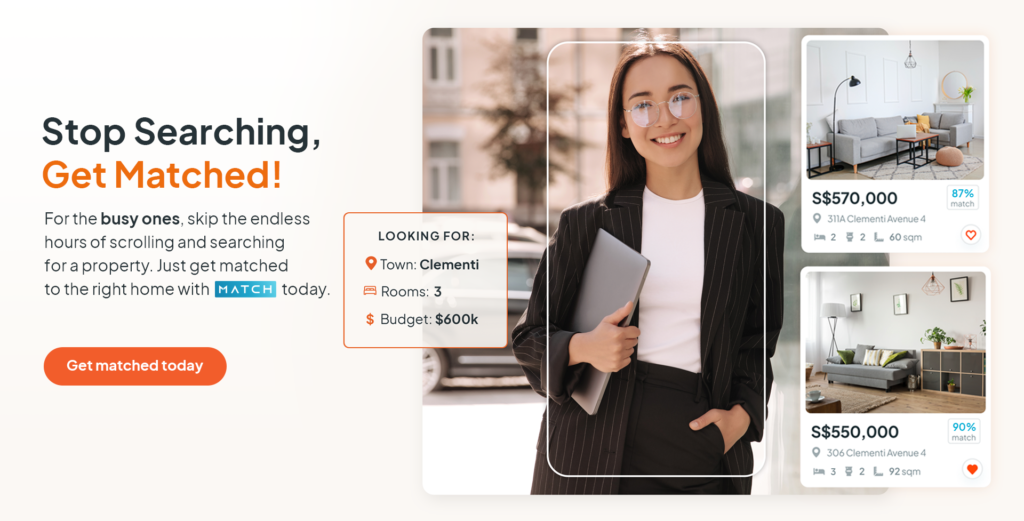
Submit your preferences to us and our algorithm will filter all our available listings based on those, and we’ll WhatsApp them to you once we find a match. We’ll also send you relevant content that you can use for your research and inform your home buying decision, so you no longer have to spend hours searching online for the information that you need.
Because at Ohmyhome, we’re always by your side, always on your side.

Frequently Asked Questions
1. How does low birth rate affect Singapore?
A low birth rate means fewer future workers, taxpayers, and homebuyers, which puts long-term pressure on the economy and housing demand. Singapore’s TFR fell to 0.87 in 2025, and without immigration, the citizen population could start shrinking by the early 2040s. It also accelerates ageing, shifting what kind of housing and services the country needs.
2. What affects property prices in Singapore?
Property prices in Singapore are shaped by a mix of supply, demand, government policy, and economic conditions. Cooling measures like ABSD, interest rate movements, BTO supply levels, and population growth all play a role. Demographic trends like shrinking household sizes and falling birth rates are also becoming increasingly important long-term factors.
3. Is it a good time to buy property in Singapore now?
It depends on your goals and timeline. The market remains stable, with HDB resale prices still growing at a moderate pace heading into 2026. For homebuyers planning to stay long-term, current conditions offer more choices and less urgency than the post-pandemic surge.
Speaking with a property agent can help you assess what makes sense for your situation.