Blog
Is A Conservation Property A Valuable Investment?
Published 8 January 2026
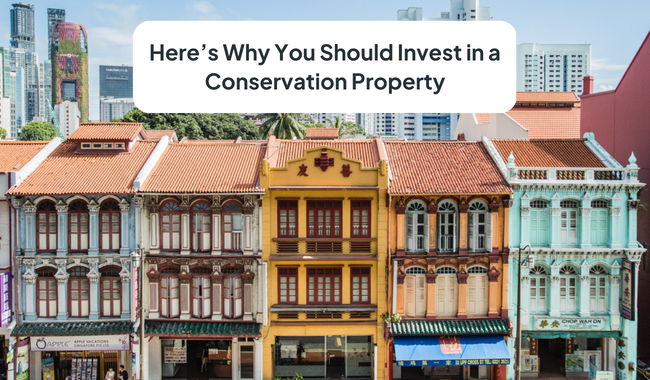
Quick Answer: Are Conservation Properties Worth It?
Yes. Conservation properties in Singapore, particularly commercial shophouses, are highly valuable investments due to their scarcity (only ~6,500 units exist) and tax efficiency. For foreign investors, commercial shophouses are especially attractive because they are exempt from the 60% Additional Buyer’s Stamp Duty (ABSD) that applies to residential properties. While rental yields have compressed to roughly 2–3%, capital appreciation remains the primary driver of value.
Investing in property means adding an asset to your portfolio that should see rental demand or property value appreciation over time. Conserved properties could be your ticket to both, but they are a different beast entirely from a standard condo.
In Singapore, where dozens of properties are built or redeveloped every year, conservation buildings are a ‘rare breed’ guaranteed to stay as they are for as long as the city-state exists. Over 7,000 such buildings have been conserved since the 1970s.
Are conservation properties the right investment for you? Here is what to think about before deciding whether to park your funds in one.
Get an instant valuation for your home Access property insights and AI tools to maximise your property's potential and sell it fast Floor - Unit Property Type Home Type - Postal Code Get FREE valuation
Key Facts About Conserved Properties
- What are conserved properties?
- Where to find conservation houses?
- What value do they hold as investments?
- What do potential owners need to take note of?
What are conserved properties?
Buildings that have architectural, historical, and cultural significance are gazetted for conservation by the Urban Redevelopment Authority (URA), a statutory board under the Ministry of National Development.
Buildings under conserved property status cannot be demolished. Owners have to seek permission from the URA if they want to renovate the place or set up certain types of businesses in the building. They generally fall into two categories:
- Shophouses: Terraced buildings (typically 2–3 storeys) with a sheltered five-foot way at the front
- Black-and-White Bungalows: Large, colonial-era estates (though most are state-owned and only for rent)
Conserved properties also include bungalows that can be zoned for residential, commercial, or a combination of both uses.
Over 6,500 conserved properties in Singapore are shophouses built between the early 1800s and mid-1900s. They originally housed businesses on the ground floors and apartments above. These days, they are usually occupied by offices, hotels, and retail or food & beverage (F&B) establishments, although some are used as residences. You can check the URA Master Plan to see how each shophouse is zoned.
Where to find conservation houses?
In 2026, activity is concentrated in three key clusters:
- District 15 (Joo Chiat & Katong): This area saw high sales activity in Q3 2025. It is a favourite for its vibrant Peranakan culture and heavy footfall from locals and expats. It can offer long-term capital growth driven by gentrification and lifestyle businesses.
- District 8 (Little India & Jalan Besar): For investors seeking a lower entry price compared to the CBD, District 8 remains a hotspot. Shophouses here often transact at an accessible quantum, with strong rental demand from backpacker hostels and creative eateries.
- Districts 1 & 2 (Boat Quay, Telok Ayer): While transaction volumes here have dipped due to high price points, they remain the ultimate wealth preservation tool for family offices and high-net-worth individuals.
What value do they hold as investments?
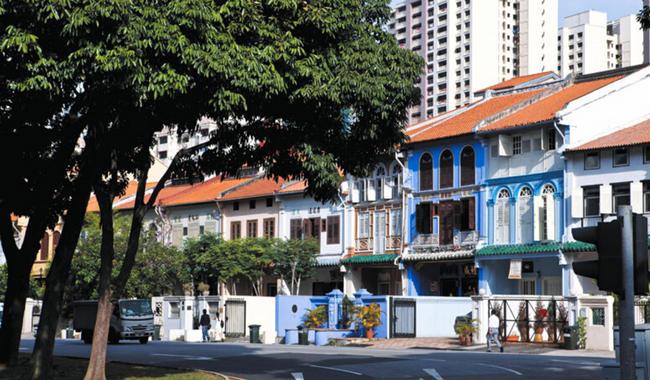
Shophouses are sought after because of their locations. They are usually in prime areas like the central business district and Orchard, or in popular residential areas like River Valley and Joo Chiat. Their limited supply, storied histories, and charm also contribute to their worth.
Shophouse transactions have risen since 2019. Today, they typically offer net yields between 1.8% to 2.5% for those with less than 99 years remaining on their lease and around 3% for those with 999-year or freehold leases. Rents have also risen. Centrally located shophouses start at $12 per square foot (psf) for ground-floor units, and $6 to $10 psf for upper floors.
Commercial shophouses can also be used for a range of uses, compared to office buildings. Shophouses zoned for commercial or commercial & residential uses on the first storey can accommodate shops, F&B establishments, gyms and fitness centres, schools, and offices. This opens them up to a wide range of tenants. Units zoned as such can be owned by foreigners as well.
Furthermore, buyers can avoid the Additional Buyer’s Stamp Duty (ABSD) and Seller’s Stamp Duty (SSD), as these do not apply to the commercial units. For mixed-use units, the duties apply only to the gross floor area used for residential purposes.

Shophouses zoned solely for residential use cannot be owned by foreigners. But today, more people are turning residential shophouses into co-living spaces that serve the expatriate community well.
Prices of Shophouses in Singapore
Location
Est. Recent Price
Tenure
Land/Floor Area (sq ft)
Price per sq ft
Zoned for
Race Course Road
$5,400,000
Freehold
~1,244
~$4,340
Commercial/Residential
Everton Road
$6,500,000
Freehold
~3,600
~$1,805
Residential
Niven Road
$5,000,000
Freehold
1,489 (Land)
~$3,356 (Land)
Residential
Dalhousie Lane
$3,650,000
99-year Lease
~1,700
~$2,147
Commercial
South Bridge Road
$13,000,000
999-year Lease/FH
~3,100
~$4,193
Commercial
Other types of conserved properties also generally appreciate in value due to their unique qualities.
For example, the privatised conserved flats at Tiong Bahru are popular among expatriates and professionals. Other properties known to hold their value include conserved bungalows and boutique hotels within conserved properties.
What do potential owners need to take note of?
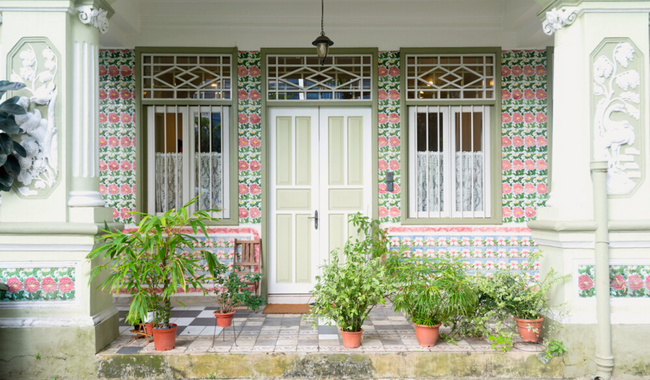
Older buildings require care and attention to ensure they stay in good shape, and work done to the property must be in line with the neighbourhood’s character. Repairs and restorations have to be carried out according to the URA’s conservation guidelines and specific facade restoration guidelines. This may increase the cost of any renovations. You cannot simply “modernise” the facade.
However, the government also provides restoration incentives, such as development charge waivers or the need to create parking lots.
In addition, owners of buildings located within the historic districts (e.g., Boat Quay, Kampong Glam) and residential historic districts (e.g., Blair Plain, Emerald Hill) have to get permission before they start business operations. Some businesses are not permitted as they are deemed disruptive, like massage parlours or nightclubs. You can check what the shophouse you are interested in can be used for here.
Investing in a Piece of History
Limited supply, good locations, and historical characteristics make conservation properties a worthwhile asset to invest in. They tend to appreciate in value and attract tenants.
Commercial or mixed-use properties may save you money on stamp duties, and demand for conserved properties located around gentrifying areas will likely keep rising. But remember, there are limits to what conserved properties can be used for and how they can be refurbished.
Owning a piece of Singapore’s history comes with responsibilities. If you take care of the conserved building, you will reap the rewards for years to come.
Ready to own a piece of Singapore’s heritage or any kind of property? Ohmyhome can guide you to the right district and handle the complex due diligence required, whether you’re interested in leasing, buying, or selling a property.
Ready to sell your home? We’re ready to help.
Schedule a consultation with one of Singapore’s top agents.
Ready to sell your home? We’re ready to help.
Schedule a consultation with one of Singapore’s top agents.
Ready to sell your home? We’re ready to help.
Schedule a consultation with one of Singapore’s top agents.
Ready to sell your home? We’re ready to help.
Schedule a consultation with one of Singapore’s top agents.
Ready to sell your home? We’re ready to help.
Schedule a consultation with one of Singapore’s top agents.
This article was originally published on Planner Bee, your handy financial planning app! Learn more about managing your money, investments, and insurance on Planner Bee’s blog.